
18th Michigan Infantry National Flag - Conservation, Correction, & Completion
Textile conservation has changed a lot in the last 60 years. While today, conservation focuses on limiting damage and avoids making significant changes to the appearance of original objects, this was not always the case. In the 1960s, many of the Capitol’s flags were sewn between layers of heavy nylon netting by Josephine Roser. While this was a state-of-the-art treatment at the time, we now know that this process has some serious drawbacks.
Roser sewed the netting on with a sewing machine, punching thousands of holes through the original fabric. She also sometimes took some “artistic liberties” with the flags, filling in empty spaces with additional fabric, enhancing original embroidery with extra machine stitches, adding modern fringe, or moving original fringe around. Additionally, to color-match the netting to national flags, Roser separated them into three pieces, and recently we discovered that she did not always reassemble these pieces correctly!
For over a year, my colleague Cambray and I have been working on a flag carried by the 18th Michigan Infantry Regiment. From the start, we noticed this flag looked a little odd. National flags usually have the most damage at the fly edge, whereas this one was missing more fabric around the pole sleeve. It is also unusual to have a star removed by the center seam of the canton; it would be far easier to cut one out from the edge.
As we began the last step in our conservation treatment, Save the Flags Curator, Matt VanAcker, suggested that we try to find a photo of this flag before Roser’s treatment. With the help of the Archives of Michigan, we got exactly what we needed! A 1960s photo of the flag, revealing that Roser flipped over the bottom strips and the canton, and moved the two lengths of fringe.
Now, we are confident that we reassembled the flag correctly, and we discovered another valuable resource for our conservation work. In the future we can consult the 1960s photos at the Archives, so we have a better idea of the changes Roser made.
-May Oyler, Conservation Specialist
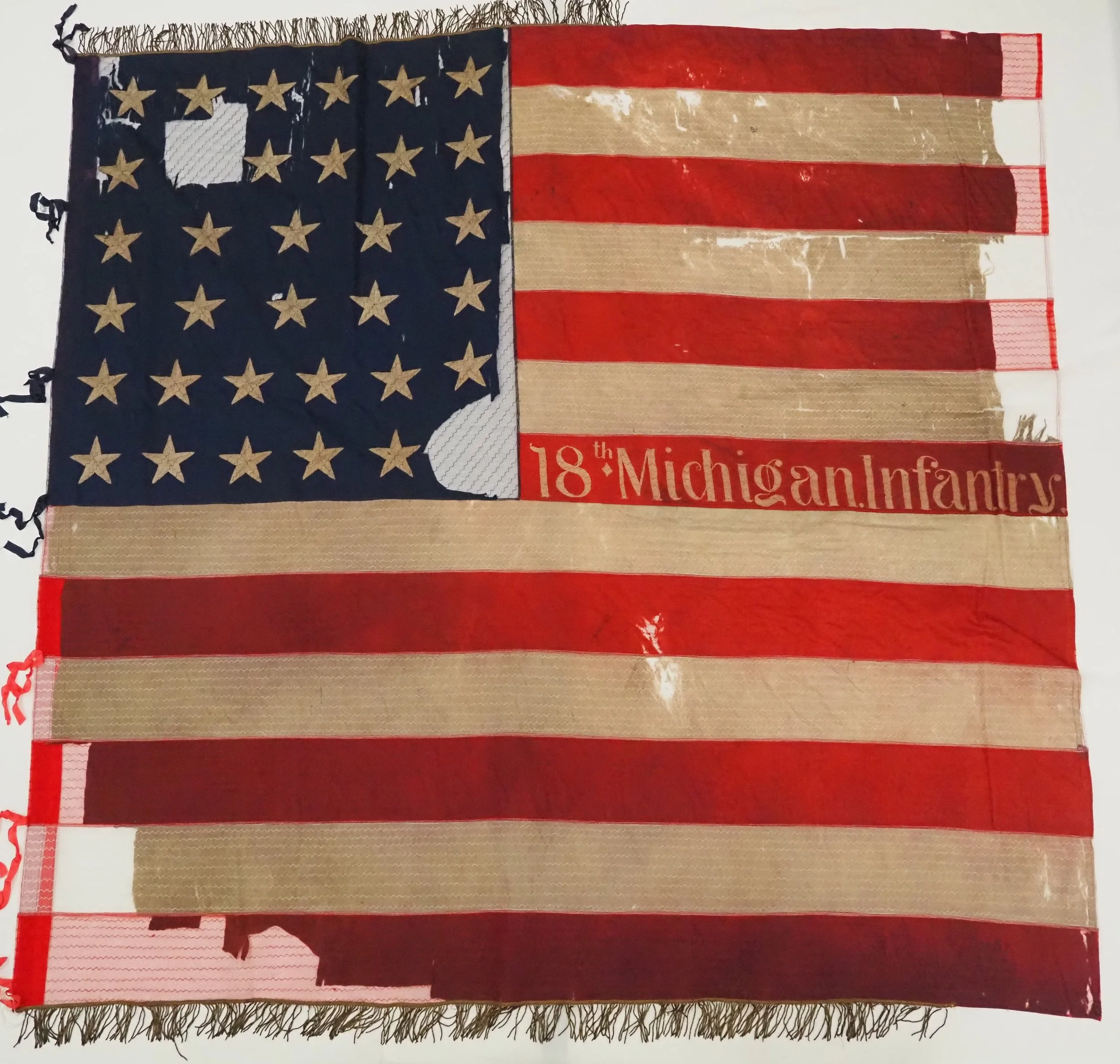
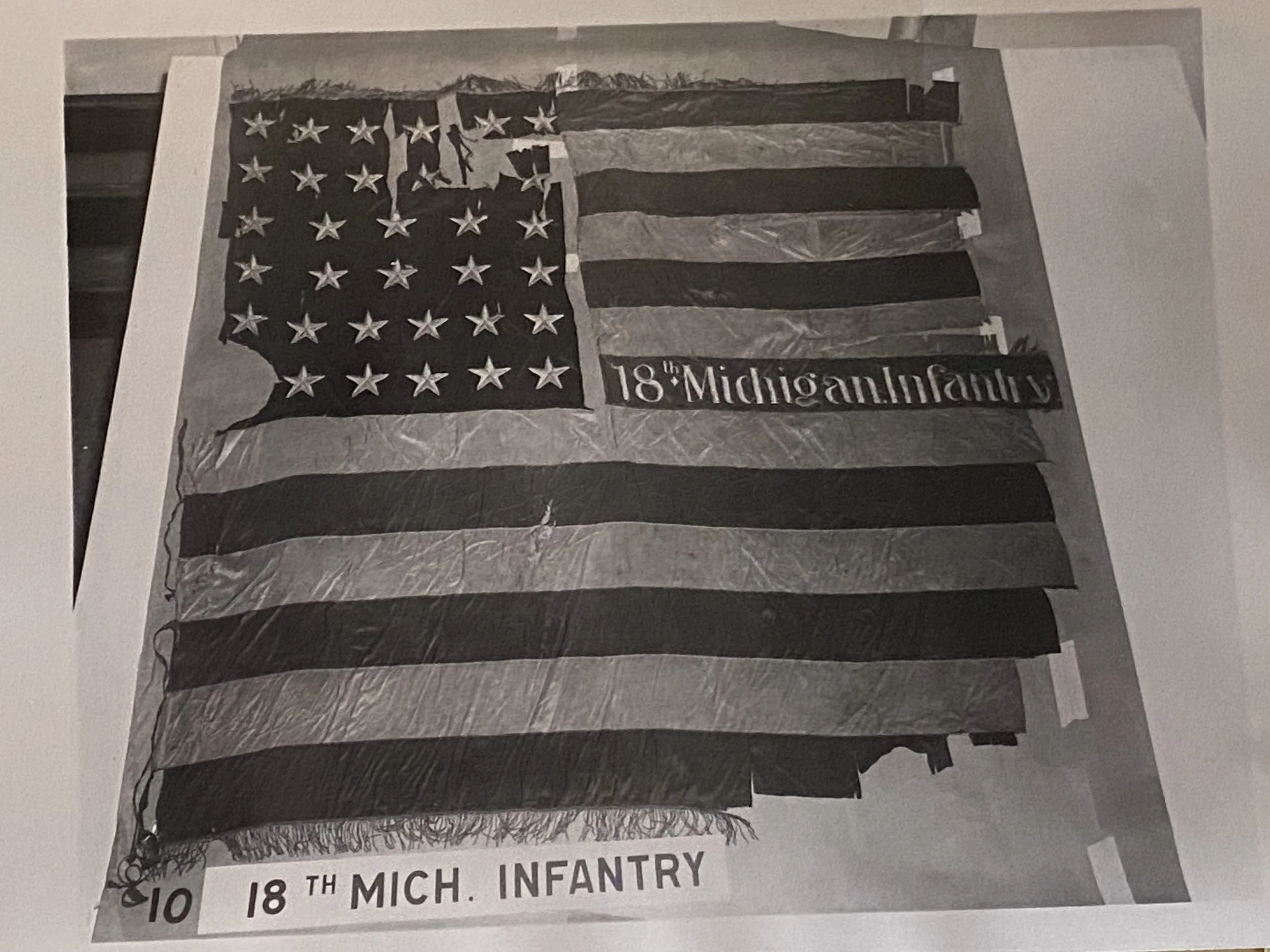
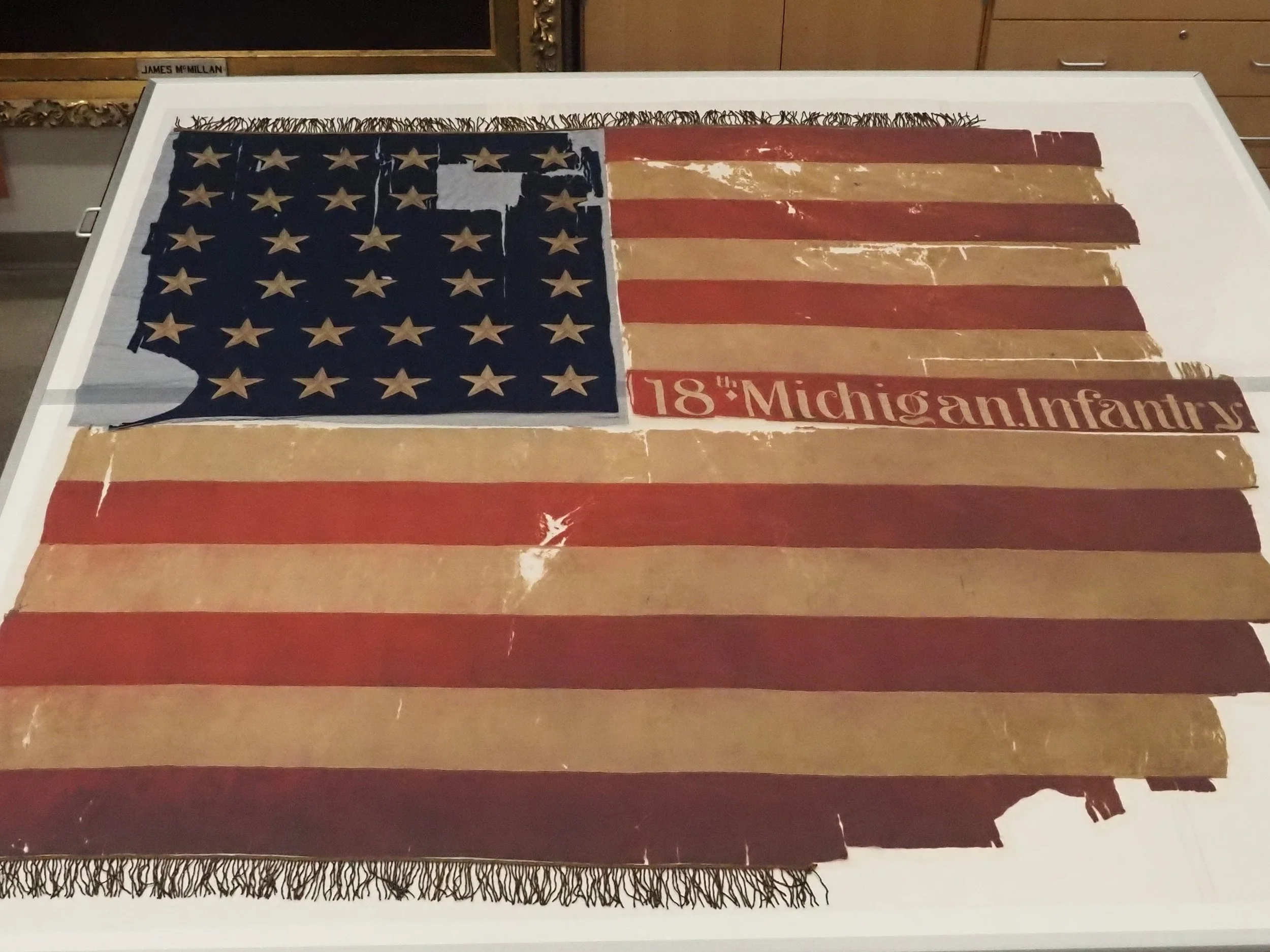
(left) The national flag of the 18th Michigan Infantry Regiment, SC-74-90, prior to 2025-2026 conservation work. (center) A 1960s photo of SC-74-90 prior to the installation of netting showing the original orientation of its canton, bottom stripes, and fringe. (right) SC-74-90 upon completion of its 2025-2026 conservation work, which included encapsulation and the correcting of some of the the flag’s orientation.