
The Process of Humidification
Save the Flags Conservation Specialists have been working hard on a flag carried by the 18th Michigan Infantry. This flag was sewn between layers of polyester netting in the 1960s so our first goal was to remove this netting. Unfortunately, during the 1960s treatment, the original seams around the canton were also taken out, so without the netting on, the flag is in three pieces. A few months ago, we finished removing the last of the netting and we’re now moving onto a process called humidification.
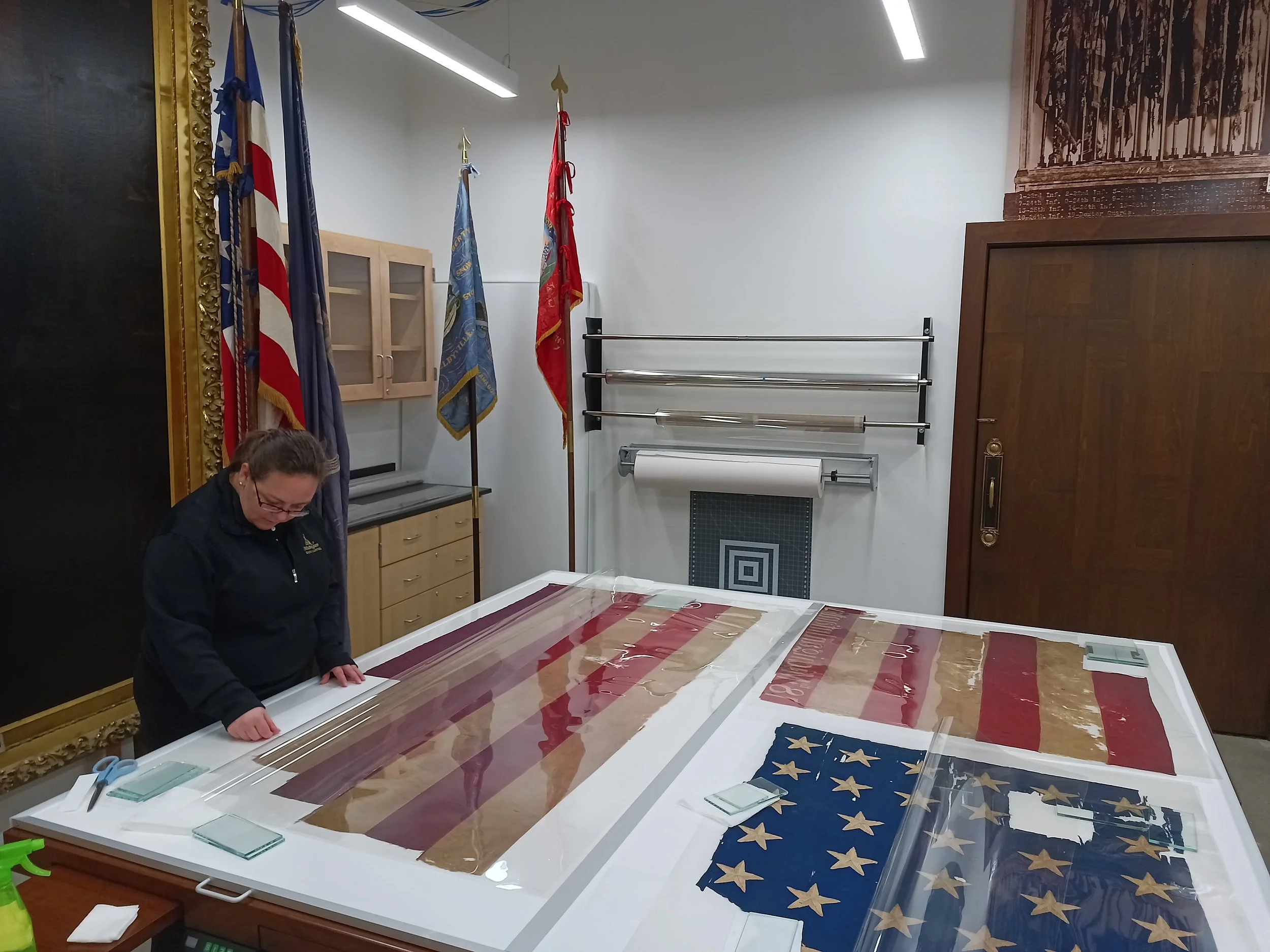
The purpose of applying moisture to the flag is to help relax the original fibers, flatten wrinkles, and remove some of the dust on the surface of the fabric. One of the risks of humidification is dye bleed, which happens when the water lifts dye out of the original fabric and deposits it in another area. The 18th’s flag already showed signs of dye bleed. At some point in the flag’s history, dye from the red stripes ran into the white stripes, staining them pink.
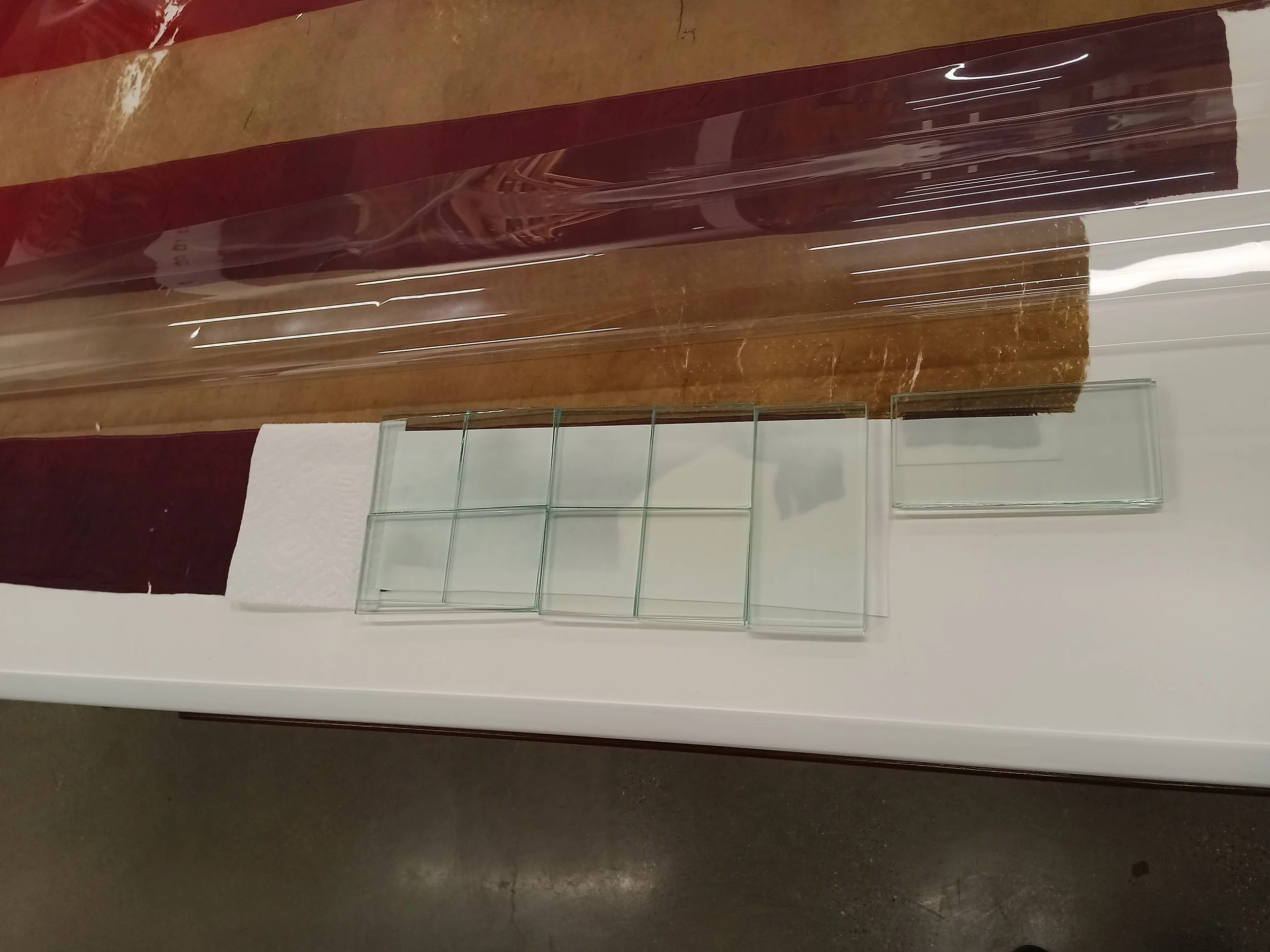
Before taking on the whole flag, we decided to do some testing to see how the fabric would respond to humidification. We applied distilled water with eye droppers in several different small areas to see if the red or blue dyes were moving. We also put a piece of damp blotting paper on one of the red stripes and let it sit under glass weights to see if the dye would appear on the paper.
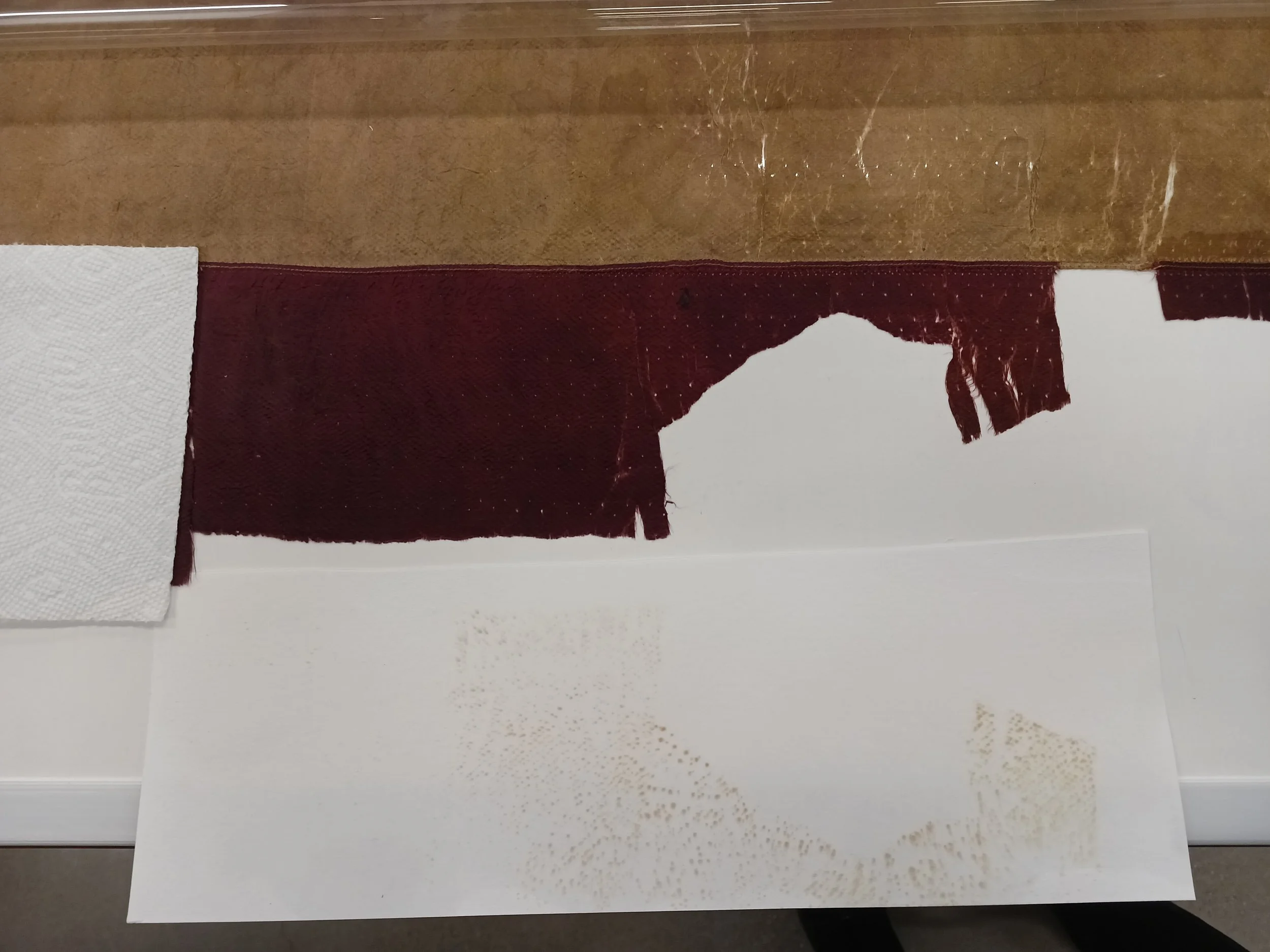
Fortunately, there was no significant dye bleed! Additionally, the damp blotting paper lifted quite a bit of dust, visible as splotchy brown stains. Now that these tests have been successful, we will continue to humidify all three sections of the flag. We’ll be back with more details on that work soon!
-May Oyler, Conservation Specialist